
From Immigrant Rights to Housing Justice, Local Activists Create Networks of Resistance Against Policies They Say Harm Marginalized Communities
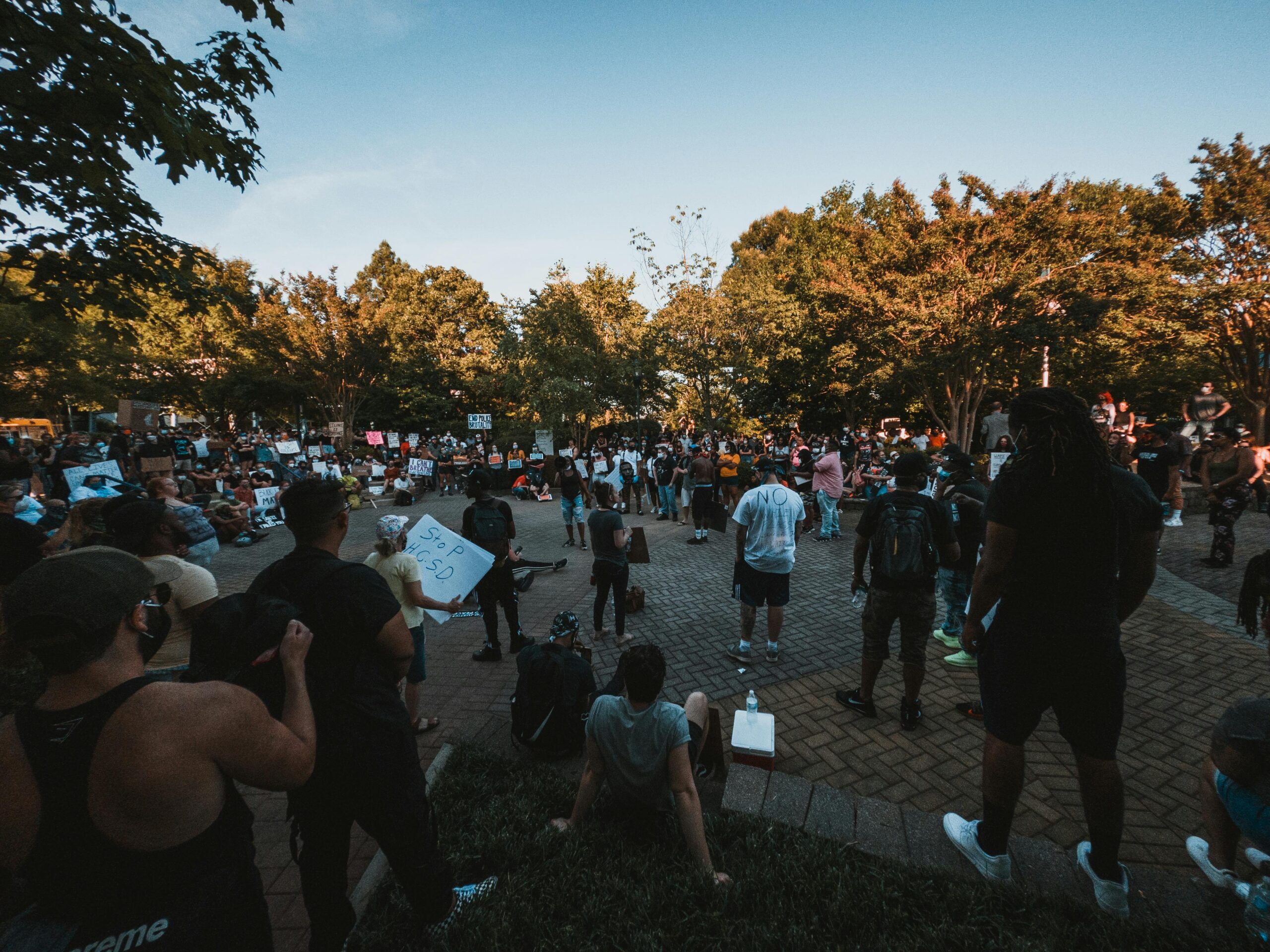
NASHVILLE — In a state where conservative Republicans dominate legislative chambers and statewide offices, a network of grassroots organizations and community activists works quietly but persistently to advance social justice agendas through coalition-building, direct action, and community organizing that operates largely outside traditional political structures.
These efforts span issue areas from immigrant rights and affordable housing to criminal justice reform and voting rights, united by a shared commitment to centering the voices of communities most affected by policy decisions. While lacking the political power to block unwanted legislation or pass preferred bills, Tennessee’s social justice movement has built infrastructure and relationships that activists hope will enable long-term systemic change.
The Tennessee Immigrant and Refugee Rights Coalition exemplifies this approach. Founded in 2003 when immigrants, refugees, and allies came together to fight for change, TIRRC has grown from an informal network of community leaders into what observers describe as one of the most diverse and effective coalitions of its kind, serving as a model for immigrant rights organizations throughout the Southeast.
TIRRC’s work falls into four categories: organizing and power building through statewide outreach and local committees, developing individual and collective leadership; policy advocacy through community organizing, direct action, legislative advocacy, and strategic communications; legal services; and civic engagement. This multi-pronged approach recognizes that advancing immigrant and refugee rights requires both immediate support for individuals navigating legal systems and long-term power building to influence policy.
The organization’s vision centers on creating a stronger, more inclusive Tennessee where people of all nationalities, immigration statuses, and racial identities can belong and thrive. In a state where anti-immigrant sentiment has driven restrictive legislation, TIRRC provides a counternarrative emphasizing the contributions immigrants make to Tennessee’s economy and communities while offering practical support to families facing deportation threats or discrimination.
NOAH, which stands for Nashville Organized for Action and Hope, focuses on dismantling racism within Nashville through work on issues determined by member organizations: affordable housing, transformational justice, education, and economic equity. The coalition structure allows diverse organizations to collaborate around shared priorities while maintaining their individual identities and missions.
NOAH’s Transformational Justice Task Force works specifically to reform Nashville’s incarceration and policing systems, which the organization asserts cause disproportionate harm to African Americans. This focus on systemic reform rather than individual cases reflects an understanding that addressing racial injustice requires changing institutions and policies, not just responding to symptoms.
The Affordable Housing Task Force addresses rising housing costs that push people out of Davidson County, recognizing that displacement represents not just an economic issue but a racial justice concern as gentrification disproportionately affects communities of color. By framing housing as a social justice issue, NOAH connects tenant organizing with broader movements for racial equity.
Erica Perry, attorney and founder of Nashville Black Assembly, emerged as a prominent voice during discussions of Project 2025 and its potential impacts on Black communities. Speaking at a panel discussion organized by Delta Sigma Theta Sorority in summer 2024, Perry outlined concerns about the conservative policy blueprint’s focus on eliminating Head Start, gutting environmental protections, weakening childcare protections, and reducing access to life-saving medications, arguing these proposals unjustly target marginalized and poor communities.
Perry’s willingness to speak publicly about threats facing Black Tennesseans exemplifies the role local leaders play in translating national policy debates into terms relevant to community members while mobilizing collective response. Nashville Black Assembly functions as a vehicle for this kind of community education and organizing around issues affecting Black residents.
Dr. Sekou Franklin, professor in the Department of Political Science at Middle Tennessee State University, brings academic expertise to social justice conversations while maintaining active engagement in community organizing. Franklin, who authored After the Rebellion: Black Youth, Social Movement Activism, and the Post-Civil Rights Generation, was appointed executive director of the John Lewis Center for Social Justice at Fisk University, positioning him to bridge academic research and practical activism.
In August 2025, Franklin delivered the keynote address at the Stand Against Injustice Rally hosted by YWCA Nashville and Middle Tennessee in partnership with the League of Women Voters. The event, held at historic Scarritt Bennett Center’s Harambee Auditorium, honored the 60th anniversary of the Voting Rights Act of 1965 under the theme Together We Rise: Advancing Justice Through Civic Engagement.
State legislators, including Senator Raumesh Akbari of District 29 in Memphis, Senator Charlane Oliver of District 19 in Nashville, and state Representative Rev. Dr. Harold Love Jr. of District 58 in Nashville, participate in social justice conversations despite operating within a political system where they lack the power to unilaterally advance progressive legislation. Their participation in community forums and advocacy organizations demonstrates a commitment to maintaining connections between formal political structures and grassroots movements.
Senator Oliver, during the Project 2025 panel discussion, noted concerns about proposals for less oversight and more autonomy for the Department of Justice, connecting this to deaths of Black Americans in police encounters. Senator Akbari emphasized the importance of voting and volunteering to effect policy change, acknowledging both the critical nature of elections and the frustration many Tennesseans feel about the political process.
Indivisible TN BIPOC, a coalition dedicated to uplifting voices of Black, Indigenous, and People of Color in Tennessee, partners with organizations like the Knoxville Area Activist Coalition to build networks for justice, equity, and community care. The coalition addresses key issues, including community safety, civic education, and leadership development, creating pathways for marginalized communities to thrive.
In October 2025, Indivisible TN BIPOC mobilized around Supreme Court hearings that appeared to signal conservative justices’ openness to curbing Section 2 of the Voting Rights Act. Civil rights groups warned that weakening this protection could dramatically shift political representation, especially in southern states like Tennessee, Georgia, and Alabama, where Black and minority communities face ongoing challenges to voting access.
The coalition also responded to a September 2025 surprise protest by a conservative group at Tennessee State University, a historically Black college in Nashville. Students and faculty quickly organized a peaceful counterresponse, calling for stronger protections against politically motivated intimidation and reaffirming TSU’s commitment to inclusivity. The incident sparked national discussion about campus safety and the future of diversity, equity, and inclusion programs.
The Mosaic Institute focuses on connecting and developing leaders of color to support transformative change in the South through its flagship fellowship program. This investment in leadership development reflects an understanding that sustainable social change requires not just immediate advocacy but the cultivation of the next generation of leaders equipped with skills, networks, and analysis to drive long-term transformation.
YWCA Nashville and Middle Tennessee operates from a mission of eliminating racism, empowering women, and advancing peace, justice, freedom, and dignity for all. The organization’s Academy for Women of Achievement, which celebrated its 2025 class in October, recognizes women and organizations committed to these values while raising funds to support YWCA’s direct services, including domestic violence support.
Tina L. Fox, Director of Community Relations for the Tennessee Coalition to End Domestic and Sexual Violence, received the 2025 Carrie Hull Award from YWCA. Fox, who serves as the great-granddaughter of a slave, worked as the first African American State Director of Victim Services for the Tennessee Board of Parole from 2012 to 2019 and has received national recognition for work with crime victims.
The Homeless Power Project brings together Nashville homeless and formerly homeless individuals to confront the root causes of homelessness and develop concrete solutions within the Nashville community. This organizing model directly impacted people in leadership roles, challenging traditional charity approaches that position unhoused people as passive recipients of services rather than active agents in addressing their own circumstances.
Justice for Our Neighbors provides immigration legal services, the Nashville Peace and Justice Center promotes peacemaking and social and environmental justice, and the Interfaith Alliance of Middle Tennessee works to promote interfaith cooperation around shared religious values. These organizations represent diversity of approaches within Tennessee’s social justice ecosystem, from direct legal services to faith-based organizing to broad-spectrum advocacy.
The challenges facing Tennessee’s social justice movement prove formidable. Davidson County voter apathy, with only 13 percent of registered voters participating in recent elections despite more than 500,000 registered, limits the electoral power that might translate grassroots organizing into policy victories. State-level politics remain dominated by Republican supermajorities, enabling the passage of legislation that advocates view as harmful to marginalized communities.
Yet activists express determination to continue building power through organizing, education, and coalition work. As one organizer stated, voting matters despite cynicism, and volunteering to effect policy change remains essential. The Stand Against Injustice Rally attracted diverse attendance, suggesting an appetite for collective action even in a challenging political environment.
Looking forward, Tennessee’s social justice movement faces questions about how to translate grassroots energy into tangible policy gains, how to sustain organizing efforts over years or decades required for systemic change, and how to build coalitions broad enough to shift political dynamics in a conservative state. The infrastructure being built through organizations like TIRRC, NOAH, Nashville Black Assembly, and dozens of others may not produce immediate legislative victories, but activists argue it creates a foundation for long-term transformation that honors the struggles of previous generations while charting paths forward for those who follow.