
Selective Outrage and Strategic Interests: Rethinking Washington’s Nigeria Narrative
Talibdin “TD” El-Amin, “Ramblings Of An Issuecrat”
The sudden moral urgency from Washington over attacks on Christians in Nigeria deserves scrutiny. Not because the violence is unreal or unworthy of concern—but because the framing, timing, and political utility of the word “terrorist” have a long, selective history. When the U.S. government invokes that label, it often does more than describe a threat. It licenses intervention.
Nigeria sits at the center of that contradiction.
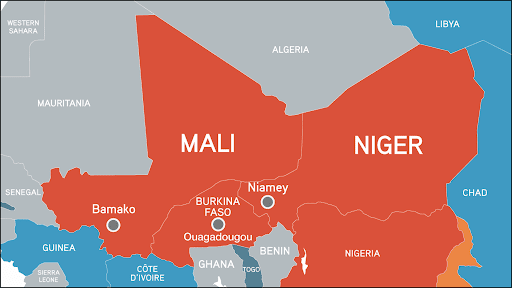
Nigeria is Africa’s largest oil producer, rich in gas, critical minerals, and rare earth prospects increasingly vital to the global energy transition. It also anchors West Africa geographically, bordering or influencing states now aligned in the Sahel’s anti-imperialist turn—particularly the Alliance of Sahel States (AES), which includes Mali, Burkina Faso, and Niger. That bloc has openly rejected Western military tutelage and economic conditionality, framing their break as resistance to neo-colonial control. Nigeria’s proximity matters. Its alignment matters. Its resources matter.
The humanitarian language does too—especially when it opens doors.
Washington’s emphasis on protecting Nigerian Christians echoes a familiar pattern: a narrow moral lens applied to a strategically valuable theater, while parallel or worse abuses elsewhere are ignored. If protection of Christians were truly the standard, the silence on Palestinian Christians would be indefensible. Churches in Gaza and the West Bank have been struck, congregations displaced, and Christian holy days disrupted—often without condemnation from the same leaders now invoking religious freedom in Africa.
This hypocrisy is especially stark coming from figures like Benjamin Netanyahu and Donald Trump, who suddenly champion Christian protection abroad while enabling or excusing actions that endanger Christian communities in Palestinian territories. Moral clarity cannot be selective. If it is, it is not morality—it is messaging.
The word “terrorist” has long served as that message. Once deployed, it compresses complexity, erases political roots, and simplifies conflicts into security problems solvable by force. The results are familiar. Libya was “liberated” into fragmentation. Iraq was invaded under a security pretext that collapsed the state and ignited sectarian violence. Egypt became a counterterrorism partner while mass repression expanded unchecked. In each case, the label smoothed the path for military involvement while outcomes worsened for civilians.
Nigeria’s violence—between farmers and herders, extremist factions, criminal networks, and state failures—is real and tragic. But collapsing it into a single religious-terror frame ignores history, economics, climate stress, and governance breakdowns. It also invites a familiar solution set: security cooperation, military assistance, intelligence sharing—often with little accountability.
So the question must be asked plainly: who’s next?
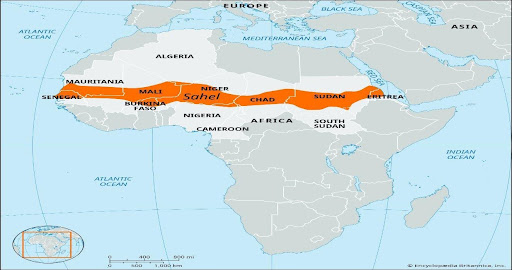
Look for the pattern. Strategic location. Valuable resources. A government under pressure. Popular anti-imperialist sentiment. A conflict that can be rebranded as terrorism. The Sahel fits. Nigeria fits. Others will too.
A genuine concern for Christians—or any civilians—would demand consistency: accountability everywhere, restraint in language, and solutions that address root causes rather than justify entry. Until then, skepticism is not cynicism. It is historical literacy.